
For many of us, a morning cup of coffee is more than just a routine; it’s a ritual. It’s that quiet moment before the day’s chaos begins, a warm companion that awakens the senses and sharpens the mind. But what if that daily ritual could be even more satisfying? What if, with just a few simple adjustments, you could unlock a world of flavor you never knew existed in your coffee beans? You don’t need to be a professional barista or invest in expensive equipment to elevate your home-brewed coffee from good to truly exceptional. The secret lies in understanding a few fundamental principles that can transform your daily cup into a rich, aromatic, and deeply flavorful experience.
Many people believe that the quality of coffee is solely determined by the beans themselves. While starting with high-quality beans is certainly important—as we’ve explored in articles like “How to Identify a Good Coffee by Its Aroma and Color”—the way you prepare it plays an equally crucial role. Simple, often-overlooked details in the brewing process can either mute or magnify the delicate notes and complex aromas that roasters work so hard to perfect. In this guide, we’ll walk you through five simple yet powerful methods that will help you brew a consistently delicious cup of coffee, making every sip a moment to savor.
1. The Magic of Water: Temperature and Quality
It may sound obvious, but coffee is over 98% water. This means the quality and temperature of your water have a massive impact on the final taste. Using filtered water is a non-negotiable first step, as the chlorine and impurities in tap water can introduce unwanted flavors, masking the coffee’s true character. But beyond quality, temperature is the single most important variable in coffee extraction.
Water that is too hot (boiling) will scorch the coffee grounds, resulting in a bitter, harsh taste. On the other hand, water that is too cool won’t extract enough flavor, leaving you with a weak, underdeveloped, and sour cup. The ideal brewing temperature for most methods is between 195°F and 205°F (90°C to 96°C). You don’t need a fancy kettle with a built-in thermometer to get this right. Simply bring your water to a boil, then let it sit for about 30 to 45 seconds before pouring. This brief cooling period is usually enough to bring it down to the perfect temperature range, ensuring a balanced and flavorful extraction every time.

2. Grind Just Before You Brew
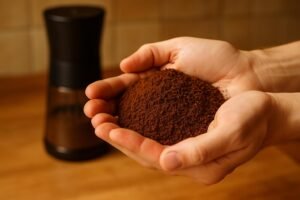
Coffee’s aroma is one of its most enchanting qualities, but it’s also incredibly volatile. The moment you grind coffee beans, they begin to release their aromatic oils and compounds. After just 15 minutes, pre-ground coffee can lose up to 60% of its aroma. When you buy pre-ground coffee, you’re missing out on a significant portion of the sensory experience. Grinding your beans just moments before you brew is arguably the single biggest step you can take to improve your coffee’s flavor.
A burr grinder is highly recommended over a blade grinder. Blade grinders chop beans into uneven pieces, leading to an inconsistent extraction where some grounds are over-extracted (bitter) and others are under-extracted (sour). A burr grinder, however, mills the beans between two revolving abrasive surfaces, producing a much more uniform grind size. This consistency allows for an even extraction, resulting in a cup that is balanced, sweet, and full of nuanced flavor. As we’ve discussed in “How Different Grind Sizes Completely Transform Your Coffee”, the right grind size is key to unlocking your coffee’s potential.
3. Let It Bloom: The 30-Second Transformation
If you’ve ever watched a barista prepare a pour-over, you may have noticed them pour a small amount of hot water over the grounds and then pause before continuing. This step is called “the bloom,” and it’s a crucial part of the brewing process that many home brewers skip. When hot water first hits freshly roasted coffee grounds, it triggers the release of trapped carbon dioxide (CO2) gas from the roasting process. You’ll see the coffee bed expand and bubble up—this is the bloom.
Why is this important? If you skip the bloom and immediately drench the grounds, the escaping CO2 will push the water away, preventing it from evenly saturating the coffee. This leads to an uneven extraction and a less flavorful cup. To perform a bloom, simply pour just enough hot water (about twice the weight of the coffee grounds) to wet all the grounds evenly. Wait for about 30-45 seconds as the gases escape, then continue with your main pour. This simple pause allows for a much more even and effective extraction, bringing out the sweetness and complexity of the coffee. This technique is especially important for pour-over methods but can also be applied to French press and other immersion brewers.

4. The Golden Ratio: Weigh Your Coffee and Water
Consistency is the key to brewing great coffee day after day. While using scoops for coffee and measuring cups for water can get you close, these methods are notoriously inaccurate. The density of coffee beans can vary, and a scoop of dark roast will weigh less than a scoop of light roast. To achieve a consistently balanced cup, you need to use a digital kitchen scale to weigh both your coffee and your water.
The generally accepted “golden ratio” for brewing coffee is 1:15 to 1:18, meaning for every 1 gram of coffee, you use 15 to 18 grams of water. For example, to brew a 12-ounce (approximately 340-gram) cup, you would use about 20 grams of coffee. This ratio is a fantastic starting point, but feel free to adjust it to your personal taste. If you prefer a stronger, more robust cup, try a ratio closer to 1:15. For a lighter, more delicate brew, a 1:18 ratio might be perfect. By weighing your ingredients, you take the guesswork out of brewing and gain precise control over the strength and flavor of your coffee, ensuring that perfect cup every single time.

5. Taste and Adjust: Become Your Own Barista
Ultimately, the “perfect” cup of coffee is subjective. It’s the one that tastes best to you. The tips above are not rigid rules but rather guidelines to help you on your journey of coffee discovery. Don’t be afraid to experiment! If your coffee tastes too bitter, try a slightly coarser grind or a lower water temperature. If it’s too sour, a finer grind or a longer brew time might be the answer. Pay attention to the flavors you’re tasting and how they change with each adjustment.
This process of tasting and tweaking is how you’ll develop your palate and learn what you truly enjoy in a cup of coffee. It transforms the act of brewing from a mindless routine into an engaging and rewarding hobby. As you explore different beans, roasts, and brewing methods, you’ll gain a deeper appreciation for the incredible diversity of flavors that coffee has to offer. From the fruity notes of an Ethiopian Yirgacheffe to the chocolatey richness of a Guatemalan Antigua, a whole world of flavor is waiting to be discovered, right in your own kitchen.
By embracing these simple methods, you’ll not only improve the taste of your daily coffee but also deepen your connection to it. Each cup becomes a small, handcrafted creation, a testament to the care and attention you put into it. So go ahead, give these tips a try, and unlock the true potential of your coffee beans. Your morning ritual will never be the same.

Gabriel James is passionate about the world of coffee, with hands-on experience in specialty beans and artisanal brewing. He has worked in local coffee shops and closely observed extraction and service techniques. Today, he uses this blog to share accessible and relevant tips that help beginners understand and better appreciate coffee in their daily lives. His goal is to make learning simple and inspire more people to explore new flavors and methods.