
One of the most intriguing discoveries I made as I deepened my knowledge about coffee was this: two coffees from the same region, sometimes even from the same country, can have completely different flavors. I used to imagine that geography was the main determining factor of coffee flavor. If two coffees came from Ethiopia, shouldn’t they taste similar?
The answer is far more complex and fascinating than I expected. The differences between coffees from the same region reveal the incredible complexity of coffee production and the countless variables that influence the final result in your cup.
The altitude factor
The most obvious difference between coffees from the same region is altitude. Even within a single coffee-growing region, altitude can vary drastically. A coffee farm at 1,500 meters will produce beans with completely different characteristics than a farm at 2,000 meters, even if they are only a few kilometers apart.
Higher altitude means lower temperatures, which slow down the ripening process. This slower maturation allows more complex sugars and acids to develop in the bean. The result is a coffee with greater complexity, higher acidity, and more pronounced flavor.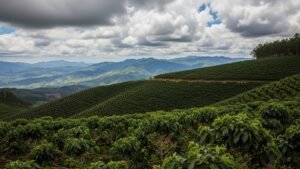
Coffee grown at lower altitudes ripens more quickly. The beans develop fewer complex compounds, resulting in a flatter, less interesting flavor profile. This is why specialty coffee enthusiasts specifically seek out high-altitude coffees. Altitude directly impacts the quality and complexity of what you taste.
Understanding what makes mountain-grown coffee so superior helped me realize that altitude is not just a secondary variable—it is fundamental to coffee quality. Two farms in the same region can produce drastically different coffees simply because one is located at a higher altitude.
Microclimate variations
Within the same region, microclimates can vary significantly. One hillside may receive more rainfall than another. One area may have more shade due to tree canopy. One location may experience greater temperature fluctuations between day and night.
These microclimate variations affect everything from the growth rate of the coffee plants to the development of the beans on the tree. A coffee farm on a north-facing slope receives different sun exposure than one on a south-facing slope. This seemingly small difference can significantly affect the final flavor.
Some regions have distinct microclimates based on proximity to water sources, altitude changes, or forest cover. Coffee farmers in these regions are fully aware of how location affects the harvest. They may even separate and process coffees from different microclimates independently to maintain consistency or highlight specific flavor characteristics.
Soil Composition Differences
Coffee flavor is heavily influenced by soil composition. Different soils contain different mineral profiles, different levels of nutrients, and different pH levels. All of these factors affect how the coffee plant grows and what compounds develop in the bean.
Within a single region, soil composition can vary dramatically. One area might have volcanic soil rich in minerals. Another might have clay-based soil. A third might have sandy soil. Each produces coffee with distinctly different flavor characteristics.
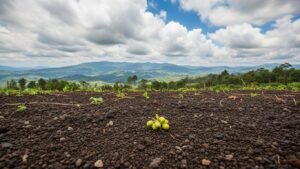
This is why some coffee regions are famous for specific flavor profiles. The soil in those regions naturally produces coffees with those characteristics. But even within those regions, variations in soil composition create variations in flavor.
Farmers who understand their soil can sometimes predict what flavor notes their coffee will have. They know that their specific soil composition will produce coffees with certain characteristics. When you taste a coffee and notice specific mineral or earthy notes, you’re often tasting the soil the coffee was grown in.
Processing Method Variations
Even if two coffees come from the same region and are grown at the same altitude, the processing method used can dramatically change the final flavor. There are several primary processing methods: washed (wet) processing, natural (dry) processing, and honey (pulped natural) processing.
Each method produces distinctly different flavor profiles. Washed coffees tend to be cleaner and more acidic. Natural coffees tend to be fruitier and fuller-bodied. Honey-processed coffees fall somewhere in between, with characteristics of both.
But it goes deeper than just the primary method. Within each method, there are countless variations. How long is the coffee fermented? How is it dried? What temperature is used? Each decision affects the final flavor.
Two farmers in the same region might use different processing methods, resulting in coffees that taste completely different despite coming from the same area. This is why understanding differences between coffees from different regions of the world requires understanding not just geography but also production methods.
Varietal Differences
Coffee plants come in different varieties, just like apple trees or grape vines. The most common varieties are Bourbon, Typica, and Catimor, but there are dozens of others. Different varieties have different flavor characteristics.
Two farms in the same region might grow different coffee plant varieties. One might grow Bourbon, which produces coffees with chocolate and nutty notes. Another might grow Typica, which produces coffees with more floral and fruity notes. The same region, the same altitude, the same soil—but different varieties create different flavors.
Some regions have become known for specific varieties. Ethiopian coffees often feature Heirloom varieties that produce distinctive fruity and floral notes. Colombian coffees often feature Bourbon and Typica varieties. But within each region, you’ll find multiple varieties, each contributing its own flavor profile.
Harvest Timing
When coffee is harvested affects its flavor. Coffee cherries ripen over time, and picking at different stages of ripeness results in different flavor profiles. Ripe cherries produce sweeter, more complex coffees. Under-ripe cherries produce more acidic, sometimes grassy coffees. Over-ripe cherries can produce flat, sometimes fermented flavors.
Different farmers harvest at different times. Some pick only the ripest cherries, which is labor-intensive but produces higher quality coffee. Others do bulk harvesting, picking all cherries regardless of ripeness, which is faster but produces more variable quality.

Within a single region, some farmers might be meticulous about harvest timing while others are less careful. This creates variation in flavor even among coffees from the same area. When you taste a coffee and notice it’s particularly sweet or particularly acidic, you might be tasting the result of careful harvest timing—or the lack thereof.
Fermentation and Drying Variations
The fermentation and drying process has enormous impact on coffee flavor. These processes are where much of the flavor development happens. The length of fermentation, the temperature during fermentation, the method of drying—all of these variables affect the final cup.
Different farmers use different fermentation techniques. Some ferment in water. Some ferment in the fruit. Some use controlled fermentation with specific temperatures. Each approach produces different flavor results.
The drying process is equally variable. Some coffees are dried on raised beds. Some are dried on the ground. Some are dried in the sun. Some are dried in mechanical dryers. The drying method and duration affect moisture content, which affects flavor development.
Two farmers in the same region might use completely different fermentation and drying approaches, resulting in coffees that taste completely different. This is why how coffee bean freshness shapes the entire experience extends beyond just how recently the coffee was roasted—it includes how it was processed from the moment the cherry was picked.
Roasting Differences
Even if two coffees come from the same farm and are processed identically, different roasters will produce different results. Roasting is both art and science. The roast profile—the temperature curve, the duration, the specific roasting technique—dramatically affects the final flavor.
A light roast will emphasize the coffee’s origin characteristics and acidity. A dark roast will emphasize body and roasted flavors, sometimes obscuring origin characteristics. A medium roast falls somewhere in between.
Different roasters have different roasting philosophies and different equipment. One roaster might prefer light roasts that highlight origin characteristics. Another might prefer medium roasts that balance origin and roasted flavors. The same green coffee beans produce different results depending on who roasts them.
This is why buying from specialty roasters matters. Good roasters understand their beans and roast them to highlight their best characteristics. They know that a coffee from one farm might be best as a light roast, while a coffee from another farm might shine as a medium roast.
The Role of Farmer Expertise
Ultimately, much of the variation in coffees from the same region comes down to farmer expertise and care. Experienced farmers know their land intimately. They understand their specific microclimates, their soil, their altitude. They make deliberate choices about what varieties to plant, when to harvest, how to process.
Farmers who care deeply about quality produce better coffee than farmers who are simply trying to maximize yield. This is true even within the same region. Two adjacent farms can produce dramatically different coffees based on the farmer’s knowledge, experience, and commitment to quality.
Learning about award-winning coffees and what makes them truly special reveals that the best coffees often come from farmers who have spent years perfecting their craft. Their expertise shows in every cup.
Regional Reputation vs. Individual Quality
This variation within regions is important to understand because it means that regional reputation doesn’t guarantee quality. Just because a coffee comes from a famous coffee region doesn’t mean it’s good. The region provides potential, but the individual farmer, processor, and roaster determine the actual quality.
Conversely, some excellent coffees come from less famous regions or from small farms that don’t have the regional reputation of larger, more established areas. The quality comes from the specific farm and the people involved, not just the region.
This is why specialty coffee buyers focus on traceability. They want to know not just what region the coffee comes from, but which farm, which farmer, which processor, and which roaster. Each of these factors contributes to the final flavor.
Tasting the Differences
The best way to understand how much variation exists within a single region is to taste coffees from the same region side by side. Buy two or three coffees that are labeled as coming from the same region—ideally from different farms or different roasters.
Brew them the same way and taste them without knowing which is which. You’ll likely be surprised by how different they taste. One might be bright and acidic. Another might be full-bodied and sweet. A third might be balanced with chocolate notes.
These differences are not random. They are the result of specific choices made by farmers, processors, and roasters. Understanding what creates these differences deepens your appreciation for coffee and helps you make better purchasing decisions.
Conclusion: The region is only the starting point.
The coffee-producing region is important, but it is only the starting point for understanding flavor. Within any region, countless variables create variations. Altitude, microclimate, soil, variety, harvest timing, processing method, fermentation, drying, and roasting—all of these play an important role.
The best-tasting coffees are usually the result of careful attention to all of these variables. Farmers who understand their land, processors who care about quality, and roasters who know how to extract the best from their beans—these are the people who create exceptional coffees.
When you taste a coffee from a specific region, you are not just tasting geography. You are tasting the result of every decision involved in producing that coffee up to your cup. Understanding the variations within each region helps you appreciate the complexity and care dedicated to creating exceptional coffee.

Gabriel James is passionate about the world of coffee, with hands-on experience in specialty beans and artisanal brewing. He has worked in local coffee shops and closely observed extraction and service techniques. Today, he uses this blog to share accessible and relevant tips that help beginners understand and better appreciate coffee in their daily lives. His goal is to make learning simple and inspire more people to explore new flavors and methods.