
Most of us take coffee for granted. We walk into a café, order a cup, and don’t think much about how this beverage became so ubiquitous in our daily lives. But the story of how coffee arrived in Europe is far stranger and more fascinating than most people realize.
Coffee didn’t arrive in Europe through normal trade routes. It didn’t come from merchants looking to profit from a new commodity. Instead, coffee arrived in Europe through a combination of curiosity, religious controversy, and sheer luck. The journey of coffee to Europe is a tale of cultural clash, adaptation, and the power of a single beverage to change the course of history.
If you’ve ever wondered how coffee became such an integral part of European culture, this article will take you on a journey through time to discover the strange and fascinating story of how coffee first arrived in Europe.
The Ottoman Empire and Coffee Culture
To understand how coffee arrived in Europe, we first need to understand coffee’s role in the Ottoman Empire. By the 16th century, coffee had become deeply embedded in Ottoman culture. Coffee houses were thriving in Istanbul, Cairo, and other major cities throughout the Ottoman Empire.
These Ottoman coffee houses were not just places to drink coffee. They were centers of social life, intellectual discourse, and political debate. Men gathered in coffee houses to discuss philosophy, politics, and current events. Coffee houses became known as “schools of the wise” because of the intellectual conversations that took place within their walls.
The Ottoman Empire controlled the trade routes that connected Europe to the Middle East and Asia. This meant that the Ottoman Empire had a monopoly on coffee. They controlled where coffee came from, how much was produced, and who could buy it. The Ottoman Empire was protective of this valuable commodity.
Venice: The Gateway to Europe
Venice was the first European city to encounter coffee in a significant way. As a major trading hub, Venice had connections to the Ottoman Empire and the Middle East. Venetian merchants traveled to Ottoman ports and brought back exotic goods, including coffee.
The first documented mention of coffee in Europe comes from Venice in the early 17th century. Venetian merchants began importing small quantities of coffee from the Ottoman Empire. At first, coffee was extremely rare and expensive. Only the wealthy could afford to drink coffee.
Coffee arrived in Venice not as a beverage for the masses, but as an exotic luxury item. It was treated similarly to other rare spices and goods that came from the East. People were curious about this strange dark beverage from the Ottoman Empire.
The Religious Controversy
Here’s where the story of coffee in Europe becomes truly strange. When coffee arrived in Europe, it sparked a religious controversy that seems absurd by modern standards.
Some Catholic clergy in Europe were suspicious of coffee. They saw it as a Muslim drink, imported from the Ottoman Empire. There was concern that drinking coffee would somehow make Europeans more sympathetic to Islam or would corrupt Christian values.
The controversy became so significant that the Pope at the time was asked to weigh in on the matter. According to legend, the Pope tasted coffee and enjoyed it so much that he blessed it, declaring it acceptable for Christians to drink. This story may or may not be true, but it illustrates how strange and controversial coffee was considered when it first arrived in Europe.

The Spread Through Europe
Despite the religious controversy, coffee gradually spread throughout Europe during the 17th century. It arrived in different European cities through different routes and at different times.
Coffee reached France through Marseille, which had trade connections to the Ottoman Empire. French merchants began importing coffee, and it gradually became popular among the French aristocracy. By the late 17th century, coffee houses were opening in Paris.
Coffee reached England through London merchants who had trade connections to the Ottoman Empire and the Levant. The first English coffee house opened in Oxford in 1650. Coffee houses quickly became popular gathering places in England, similar to their role in the Ottoman Empire.
Coffee reached the Dutch through their trade connections in the East Indies. The Dutch began growing coffee in their colonies, which helped increase the supply and lower the price. This made coffee more accessible to ordinary people, not just the wealthy.
Coffee Houses as Centers of Enlightenment
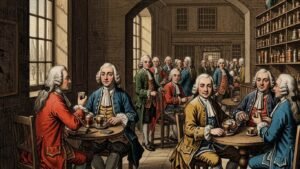
One of the most important aspects of coffee’s arrival in Europe was the rise of the coffee house. Coffee houses became centers of intellectual life and social gathering throughout Europe.
In England, coffee houses became known as “penny universities” because for the price of a penny (the cost of a cup of coffee), anyone could enter and participate in intellectual discussions. Coffee houses became gathering places for writers, philosophers, scientists, and merchants.
The scientific revolution was partly fueled by discussions that took place in European coffee houses. Scientists shared their discoveries. Philosophers debated ideas. Merchants discussed trade. Coffee houses became laboratories of thought where new ideas were tested and refined.

The Economic Impact
The arrival of coffee in Europe had significant economic consequences. As demand for coffee grew, European powers began to realize the potential for profit. They wanted to break the Ottoman monopoly on coffee production.
The Dutch began growing coffee in Java in the East Indies. The French began growing coffee in their colonies. The Spanish and Portuguese also began cultivating coffee in their colonial territories. By the 18th century, European colonies were producing significant quantities of coffee.
This shift in coffee production had major consequences for the global economy. The Ottoman Empire’s monopoly on coffee was broken. Coffee became more affordable and more widely available. Coffee consumption spread from the wealthy elite to the middle classes and eventually to ordinary people.
The Transition from Luxury to Necessity
When coffee first arrived in Europe, it was a luxury item. Only the wealthy could afford it. Coffee was exotic, mysterious, and expensive.
Over the course of the 17th and 18th centuries, coffee transformed from a luxury item into a necessity. As production increased and prices fell, more and more people could afford to drink coffee. Coffee became integrated into daily life throughout Europe.
By the 19th century, coffee had become so common that it was hard to imagine European life without it. Coffee was no longer exotic or mysterious. It was simply part of the daily routine for millions of Europeans.
The Cultural Transformation
The arrival of coffee in Europe represented more than just the introduction of a new beverage. It represented a cultural transformation. Coffee brought with it new social practices, new gathering places, and new ways of thinking.
Coffee houses introduced Europeans to a new form of social gathering. Unlike taverns, which served alcohol and were often rowdy, coffee houses were places of intellectual discourse and civilized conversation. Coffee houses became models for how public spaces could be organized and what kinds of social interactions could take place within them.
Coffee and the Modern World
The strange journey of coffee from the Ottoman Empire to Europe set the stage for coffee’s global dominance. Once coffee was established in Europe, European powers used their colonial networks to spread coffee production throughout the world.
Coffee plantations were established in the Caribbean, South America, Africa, and Asia. Coffee became one of the most important commodities in global trade. The coffee trade shaped colonial relationships, economic systems, and even political conflicts.
Today, coffee is the second most traded commodity in the world, after oil. Billions of people drink coffee every day. It’s hard to imagine that just a few hundred years ago, coffee was so exotic and controversial that religious authorities had to weigh in on whether it was acceptable for Christians to drink.
The Legacy of Coffee’s Arrival in Europe
The strange way that coffee arrived in Europe had lasting consequences. It showed how a single beverage could transform societies, create new social institutions, and reshape global economics.
The coffee house model that developed in Europe influenced how public spaces are organized even today. The idea of a place where people gather to drink coffee, have conversations, and exchange ideas is still central to how we think about coffee culture.
Coffee shaped social gatherings and friendships in Europe just as it had in the Ottoman Empire. The coffee house became a model for democratic public space where people from different backgrounds could gather as equals.
Understanding Coffee’s Journey
The story of how coffee arrived in Europe reminds us that the things we take for granted often have surprising and complex histories. Coffee wasn’t always a common beverage. It wasn’t always accepted. It had to overcome religious objections, economic barriers, and cultural resistance.
Understanding this history helps us appreciate coffee in a new way. When you drink a cup of coffee, you’re participating in a tradition that stretches back centuries. You’re part of a global community of coffee drinkers that includes people from every continent and every culture.
The strange way that coffee arrived in Europe also reminds us that cultural change often happens in unexpected ways. New ideas, new products, and new practices don’t always arrive through planned channels. Sometimes they arrive through trade, sometimes through curiosity, and sometimes through sheer accident.
The Coffee Journey Continues
The journey of coffee didn’t end when it arrived in Europe. Coffee continued to spread, evolve, and transform. The evolution of coffee preparation rituals around the world shows how different cultures adapted coffee to their own traditions and preferences.
Today, coffee is produced on every continent except Antarctica. Coffee culture varies dramatically from place to place. The way Italians prepare espresso is completely different from the way Turks prepare Turkish coffee. The way Americans drink coffee is different from the way Scandinavians drink coffee.
But all of these different coffee cultures trace their roots back to that strange moment when coffee first arrived in Europe, when religious authorities had to decide whether it was acceptable for Christians to drink, and when coffee houses began to transform European society.
The next time you visit a coffee shop, take a moment to appreciate the strange and fascinating history that brought coffee to your cup. The journey has been long, unexpected, and truly remarkable.

Gabriel James is passionate about the world of coffee, with hands-on experience in specialty beans and artisanal brewing. He has worked in local coffee shops and closely observed extraction and service techniques. Today, he uses this blog to share accessible and relevant tips that help beginners understand and better appreciate coffee in their daily lives. His goal is to make learning simple and inspire more people to explore new flavors and methods.