
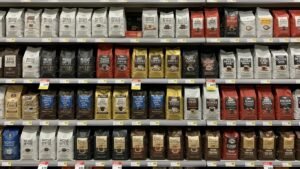
You’re standing in the coffee aisle. There are dozens of bags. They all look different. Some have fancy packaging. Some have simple labels. Some are expensive. Some are cheap.
You have 30 seconds to decide. Which one do you pick?
Most people grab whatever looks good or whatever is on sale. But if you know what to look for, you can make a much better choice in just 30 seconds.
This checklist will help you choose a better coffee every time you go to the store. It’s simple. It’s quick. It works.
The 30-Second Checklist
Here’s what to do when you’re standing in front of the coffee shelf:
Step 1: Check the roast date (5 seconds)
Pick up the bag and look for the roast date. This is the most important thing to check.
The coffee should have been roasted within the past two weeks. If the roast date is older than two weeks, put it back.
If there’s no roast date on the bag, put it back immediately. A roaster who doesn’t list the roast date is not confident in their freshness.
Step 2: Look at the origin (5 seconds)
Does the bag tell you where the coffee comes from? Is there a specific country? A specific region? A specific farm?
If the bag just says “coffee blend” with no origin information, that’s a red flag. Put it back.
If the bag tells you the origin, that’s a good sign. The roaster cares about quality and traceability.
Step 3: Check for tasting notes (5 seconds)
Does the bag describe what the coffee should taste like? Are there tasting notes?
Good coffee bags will say something like “fruity and floral” or “nutty and chocolatey” or “balanced and smooth.”
If the bag has no description of what the coffee tastes like, that’s a red flag.
Step 4: Look at the price (5 seconds)
Is the price reasonable? Specialty coffee typically costs between $12-16 per pound.
If the coffee is significantly cheaper, it’s probably old or low quality.
If the coffee is significantly more expensive, you might be paying for fancy packaging rather than quality.
If the price is in the reasonable range, that’s a good sign.
Step 5: Check the roaster’s reputation (5 seconds)
Do you recognize the roaster? Have you heard of them? Do they have good reviews?
If you don’t recognize the roaster, that’s okay. You can always ask the store staff for recommendations.
If the roaster is known for quality, that’s a good sign.
That’s it. Five steps. 30 seconds total. You now have a much better chance of choosing a good coffee.
What Each Step Tells You
Let’s break down what each step is telling you about the coffee.
The roast date tells you about freshness. Fresh coffee tastes better. It has more flavor and aroma.
The origin tells you about traceability and quality. A roaster who knows where their coffee comes from is a roaster who cares about quality.
The tasting notes tell you what to expect. If the coffee is described as fruity, you should expect fruity flavors. This helps you choose a coffee that matches your preferences.
The price tells you about value. Reasonable pricing suggests a balance between quality and affordability.
The roaster’s reputation tells you about consistency and reliability. A well-known roaster is more likely to produce consistent, quality coffee.
What If the Coffee Fails the Checklist?
If the coffee fails any of these steps, you have two options.
Option 1: Put it back and choose a different coffee.
Option 2: Ask the store staff for a recommendation.
The store staff can often help you find a coffee that passes all five steps of the checklist.
What If Multiple Coffees Pass the Checklist?
If you find multiple coffees that pass all five steps, how do you choose?
Here are some tiebreakers:
Choose based on origin. If you like fruity flavors, choose an Ethiopian coffee. If you like nutty flavors, choose a Brazilian coffee. If you like balanced flavors, choose a Colombian coffee.
Choose based on roast level. Light roasts tend to have more acidity and brightness. Dark roasts tend to have more body and richness. Medium roasts are balanced.
Choose based on processing method. Washed coffees tend to be clean and bright. Natural processed coffees tend to be fruity and full-bodied. Honey processed coffees are somewhere in between.
Choose based on your brewing method. If you use a French press, choose a medium or dark roast. If you use a pour-over, choose a light or medium roast. If you use an automatic drip machine, choose a medium roast.
Choose based on price. If multiple coffees pass the checklist and you like them equally, choose the one that’s most affordable.
Common Mistakes to Avoid
Even with the checklist, people still make mistakes. Here are the most common ones:
Mistake 1: Choosing based on packaging alone. Beautiful packaging doesn’t mean the coffee inside is good. Judge the coffee by what’s written on the bag, not by how pretty the bag looks.
Mistake 2: Ignoring the roast date. The roast date is the most important thing to check. Don’t skip this step.
Mistake 3: Buying pre-ground coffee. Pre-ground coffee loses freshness quickly. Buy whole beans and grind them yourself.
Mistake 4: Choosing based on price alone. Very cheap coffee is usually not good. Very expensive coffee might be overpriced. Choose something in the middle.
Mistake 5: Not asking for help. If you’re unsure, ask the store staff. They can help you choose a better coffee.
Using the Checklist at Different Types of Stores
The checklist works at different types of stores, but the experience might be slightly different.
At a specialty coffee shop: The staff is knowledgeable. All the coffees will likely pass the checklist. Ask the staff for recommendations based on your preferences.
At an online roaster: You can read all the information about each coffee before you buy. Take your time. Read the roast date, origin, and tasting notes carefully.
At a supermarket: The selection might be limited. Not all coffees will pass the checklist. Be patient. Look for coffees that have a recent roast date and clear origin information.
At a farmers market: You can talk directly to the roaster. Ask them questions. They can tell you about their coffee and help you choose.
The Power of the Checklist
The 30-second checklist is powerful because it’s simple and it works.
It removes the guesswork. Instead of wondering if you’re choosing a good coffee, you know you’re choosing a good coffee because it passes all five steps.
It saves time. You don’t need to spend 10 minutes comparing coffees. You can make a good choice in 30 seconds.
It improves your coffee experience. When you choose a coffee that passes the checklist, you’re more likely to enjoy it.
Making the Checklist a Habit
The best way to use the checklist is to make it a habit.
Every time you buy coffee, use the checklist. Soon, it will become automatic. You won’t even have to think about it. You’ll just naturally look for the roast date, the origin, the tasting notes, the price, and the roaster’s reputation.
After a few weeks, you’ll notice that your coffee tastes better. That’s because you’re consistently choosing better coffee.
Beyond the Checklist
The checklist is a great starting point. But there’s more you can do to improve your coffee experience.
Understand how coffee bean freshness shapes the entire experience. Freshness is crucial. The checklist helps you find fresh coffee, but understanding why freshness matters will help you appreciate the difference.
Invest in a quality grinder and learn how to grind properly. A good grinder makes a huge difference in the quality of your coffee. Grinding the coffee yourself, right before you brew it, ensures maximum freshness.
Experiment with different brewing methods. Different brewing methods bring out different qualities in coffee. Try a French press, a pour-over, an AeroPress, or a Moka pot.
Take time to taste the coffee. Don’t rush. Notice the flavors. Notice how the flavors change as the coffee cools.
The Checklist in Action
Let’s say you’re at the store. You see three bags of coffee.
Bag 1: Beautiful packaging. No roast date listed. No origin information. Price: $8 per pound.
This bag fails the checklist. Put it back.
Bag 2: Simple packaging. Roast date: two weeks ago. Origin: Ethiopia. Tasting notes: fruity and floral. Price: $14 per pound. Roaster: a well-known specialty roaster.
This bag passes the checklist. This is a good choice.
Bag 3: Simple packaging. Roast date: one month ago. Origin: Brazil. Tasting notes: nutty and chocolatey. Price: $13 per pound. Roaster: a local roaster you’ve heard good things about.
This bag fails the checklist because the roast date is too old. Put it back.
In this scenario, you would choose Bag 2. It passes all five steps of the checklist.
Conclusion
The 30-second checklist is a simple, powerful tool for choosing better coffee.
Check the roast date. Look at the origin. Check for tasting notes. Look at the price. Consider the roaster’s reputation.
Five steps. 30 seconds. A much better coffee.
Use this checklist every time you buy coffee. Make it a habit. Soon, you’ll be consistently choosing better coffee without even thinking about it.
And when you brew that coffee with care, grind it fresh, and take time to taste it, you’ll experience the difference. You’ll taste flavors you’ve never noticed before. You’ll enjoy your coffee more.
That’s the power of the checklist. It’s simple. It’s quick. It works.
So next time you’re standing in the coffee aisle, don’t just grab whatever looks good. Take 30 seconds. Use the checklist. Choose a better coffee.
Your taste buds will thank you.

Gabriel James is passionate about the world of coffee, with hands-on experience in specialty beans and artisanal brewing. He has worked in local coffee shops and closely observed extraction and service techniques. Today, he uses this blog to share accessible and relevant tips that help beginners understand and better appreciate coffee in their daily lives. His goal is to make learning simple and inspire more people to explore new flavors and methods.