
If you have ever spent a few minutes scanning the aisles of a high-end grocery store or browsing a specialty roaster’s website in the United States, you have undoubtedly seen the phrase “100% Arabica” emblazoned on almost every bag. It is marketed as a badge of honor, a gold standard that implies quality, luxury, and superior taste. On the other hand, the word “Robusta” is often spoken of in hushed, almost derogatory tones, associated with instant coffee, “gas station” brews, and bitter fillers.
But as the global coffee landscape evolves and climate change forces us to rethink how we grow our favorite bean, the conversation between Arabica and Robusta is becoming much more nuanced. Understanding the fundamental biological, chemical, and sensory differences between these two species is essential for any consumer who wants to move beyond marketing slogans. It is a journey that takes us from the cool, misty heights of the mountains to the humid, resilient lowlands, revealing why each species has a vital—and very different—role to play in your morning ritual.
The Biological Divide: Strength vs. Sophistication
To understand the difference in the cup, we must first look at the difference in the field. Arabica (Coffea arabica) and Robusta (Coffea canephora) are like distant cousins with very different personalities.
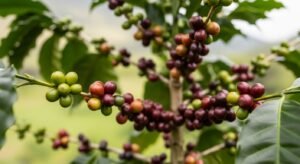
Arabica is the delicate aristocrat of the coffee world. It is a self-pollinating plant that thrives at high altitudes, typically between 600 and 2,000 meters. It is incredibly sensitive to its environment; it requires a specific temperature range, the right amount of rainfall, and it is highly susceptible to pests and diseases like “coffee leaf rust.” This fragility is part of Why Some Coffees Have Such Different Flavors Even When They’re From the Same Region. Because Arabica takes so much effort to grow, it naturally commands a higher price in the specialty market.
Robusta, as its name suggests, is a survivor. It is a cross-pollinating plant that grows at much lower altitudes, often from sea level up to 800 meters. It is physically tougher, resistant to most pests, and can handle much higher temperatures. While Arabica is struggling with the warming climate, Robusta is standing its ground. This resilience is why Robusta is a powerhouse of the global economy, providing the foundation for most of the world’s coffee production in countries like Vietnam.
The Chemistry of the Bean: Caffeine and Chlorogenic Acids
The reason Robusta is so “robust” against pests is actually found in its chemistry. Robusta beans contain nearly double the caffeine of Arabica beans. To us, caffeine is a stimulant; to the coffee plant, caffeine is a toxic pesticide. Insects that try to eat the Robusta cherry get a massive hit of caffeine that wards them off.
However, for the coffee drinker, this high caffeine content has a specific sensory consequence: bitterness. Caffeine is naturally bitter. When you combine this with the fact that Robusta also has higher levels of chlorogenic acids (CGA), you get a cup that is much more intense and “sharp.”
In contrast, Arabica has about 60% more lipids (fats) and almost double the concentration of natural sugars than Robusta. This chemical makeup is the reason Arabica is praised for its “sparkling” acidity, its floral aromas, and its complex fruity notes. It is the chemical foundation behind The Difference Between Good and Unforgettable in the Coffee You Buy. When you taste “blueberries” or “jasmine,” you are tasting the complex sugars and fats of an Arabica bean that survived the high-mountain cold.
Sensory Profiles: The Taste Test
When you brew these two side-by-side, the difference is unmistakable.
-
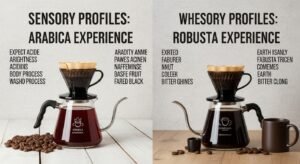
The Arabica Experience: Expect a wide range of acidity (the “brightness”). Depending on the origin, you might taste citrus, stone fruits, or floral notes. The body is usually lighter and cleaner, especially if it’s a washed process. It is a coffee meant to be explored and savored, often best enjoyed black.
-
The Robusta Experience: Expect a heavy, “thick” mouthfeel. The flavor profile is usually very simple: earthy, woody, nutty, and often reminiscent of burnt rubber or bitter chocolate. It lacks the acidity of Arabica, making it taste “flatter” but more “powerful.”
The Italian Secret: The Role of Robusta in Espresso
You might be wondering: “If Robusta is bitter and earthy, why is it still so popular in Italy, the home of espresso?” This is where the debate gets interesting. Traditional Italian espresso roasters almost never use 100% Arabica. They usually use a blend of 70% to 90% Arabica for the flavor, and 10% to 30% high-quality Robusta for the “performance.”
Robusta provides two things that Arabica lacks in an espresso machine:
-
Crema: Robusta produces a much thicker, more stable crema (the golden foam on top) than Arabica.
-
The “Kick”: In a milk-based drink like a latte or cappuccino, the delicate notes of Arabica can sometimes get lost. The “punch” of a Robusta bean ensures that the coffee flavor cuts through the sweetness of the milk.
This traditional blending is part of the Curious Coffee Traditions From Different Countries. In many cultures, the “bitterness” of Robusta is not seen as a defect, but as a necessary characteristic of a “strong” morning cup.
The Rise of “Specialty Robusta”
For decades, Robusta was treated with neglect. It was grown cheaply, processed poorly, and stored in bad conditions because “it was just Robusta.” However, a new movement is emerging in the coffee world: Specialty Robusta (or “Fine Robusta”).
Producers in countries like Brazil and Vietnam are beginning to apply specialty Arabica techniques to Robusta. They are picking only ripe cherries, using anaerobic fermentation, and drying the beans on raised beds. The result? A Robusta that is clean, creamy, and tastes like dark chocolate and toasted hazelnuts without the “burnt rubber” aftertaste. While it still doesn’t have the floral acidity of a high-altitude Arabica, Fine Robusta is becoming a legitimate option for roasters who want to offer a sustainable, high-body coffee.
Economic Impact: Price vs. Sustainability
As an American consumer, the most obvious difference is the price. Arabica is more expensive because it is harder to grow, produces lower yields per tree, and is in higher demand. Robusta is the “value” play. It allows big-box brands to offer large tins of coffee at a low price point.
However, there is a sustainability argument for reconsidering Robusta. As the “Coffee Belt” warms, many Arabica farmers are seeing their crops fail. Robusta can grow in conditions that would kill an Arabica tree. By supporting the development of “Fine Robusta,” we are essentially creating a “Plan B” for the global coffee industry. It ensures that even if climate change makes high-altitude Arabica a rare luxury, we will still have access to a quality, caffeinated beverage.
How to Tell Which One You Are Drinking
Usually, if a bag doesn’t say “100% Arabica,” it is likely a blend containing Robusta. You can also tell by the look of the beans:
-
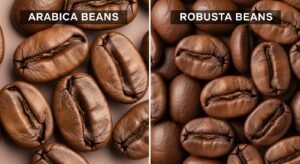
Arabica Beans: Usually more elongated/oval and have a curved, “S-shaped” crease in the middle.
-
Robusta Beans: Usually smaller, more circular/round, and have a very straight crease.
FAQs About Arabica and Robusta
-
Does Arabica have less caffeine? Yes, significantly less. A cup of 100% Arabica has about 1.2% to 1.5% caffeine, while Robusta can have as much as 2.2% to 2.7%.
-
Is instant coffee always Robusta? Not always, but the vast majority is. Because Robusta is cheaper and has more soluble solids, it is the most efficient choice for the freeze-drying process.
-
Can I grow Arabica at home? If you have a temperature-controlled environment (like a greenhouse) that mimics a tropical mountain (cool nights, humid days), you can! But don’t expect a large harvest.
The “Arabica vs. Robusta” debate is no longer a simple case of “Good vs. Bad.” It is about understanding the different tools in the barista’s toolkit. Arabica offers us the beauty, the nuance, and the complexity of the fruit. Robusta offers us the body, the intensity, and the future of sustainable farming. By appreciating both for what they are, we can develop a much deeper understanding of the world’s most beloved drink.

Gabriel James is passionate about the world of coffee, with hands-on experience in specialty beans and artisanal brewing. He has worked in local coffee shops and closely observed extraction and service techniques. Today, he uses this blog to share accessible and relevant tips that help beginners understand and better appreciate coffee in their daily lives. His goal is to make learning simple and inspire more people to explore new flavors and methods.