
As the temperatures rise and the sun begins to beat down, even the most dedicated coffee purists start to look for a colder alternative to their steaming morning mug. In the United States, the cold coffee market has exploded over the last decade, evolving from a simple “coffee over ice” to a complex category filled with technical terms. If you walk into a specialty cafe today, you are faced with a choice: Cold Brew or Iced Coffee? While they might look identical in a glass, they are fundamentally different beverages born from two completely different chemical processes.

Understanding the difference between these two isn’t just about being a “coffee snob”—it’s about knowing how temperature affects the extraction of oils, acids, and sugars from the bean. Whether you prefer the bright, crisp snap of a traditional iced pour-over or the chocolatey, low-acid smoothness of a slow-steeped cold brew, each method offers a unique way to experience your favorite beans.
The Chemistry of Heat: How Iced Coffee is Made
Traditional iced coffee is essentially “hot coffee that has been cooled down.” However, the best version of this is what professionals call the “Japanese Iced Coffee” or “Flash Chilled” method. In this process, you brew coffee hot—usually using a pour-over method like a V60 or Chemex—but you brew it directly onto a calculated amount of ice.
Why brew it hot if you want it cold? The answer lies in the chemistry of the bean. Many of the most complex aromatic compounds and bright acids in coffee are only soluble in near-boiling water (around 195°F to 205°F). When you brew hot, you extract these “sparkling” notes. By dripping the hot coffee immediately onto ice, you “flash-chill” it, locking those volatile aromatics in the liquid before they can oxidize or escape into the air. This results in a drink that is refreshing, tea-like, and highly aromatic. It is a fantastic way to highlight the profile of a Light Roast Coffee, where the floral and citrus notes are the star of the show.
The Slow Game: The Cold Brew Method
Cold brew is an entirely different animal. Unlike iced coffee, which uses heat to speed up extraction, cold brew uses time. It is a “full immersion” method where coarse coffee grounds sit in room temperature or cold water for anywhere from 12 to 24 hours.
Because the water is cold, it is much less efficient at extracting the acidic and bitter compounds from the coffee. The result is a concentrate that is naturally 60% to 70% less acidic than hot-brewed coffee. What remains is a flavor profile dominated by deep, heavy notes: dark chocolate, molasses, and nuts. This low acidity makes cold brew a savior for people with sensitive stomachs who usually struggle with the “bite” of a regular cup. This smoothness is often what defines Why Certain Cups Make Your Coffee Taste Better, as the lack of bitterness allows the palate to perceive more of the natural sweetness.

Acidity and Body: A Side-by-Side Comparison
When choosing between the two, you have to decide what your palate is craving.
-
Iced Coffee (Flash Brew): Think of this as a crisp white wine. It is light-bodied, has a clear color, and features a bright, “zippy” acidity. You’ll taste the fruit, the flowers, and the terroir of the mountain. It is best enjoyed black, without any milk or sugar, to appreciate its clarity.
-
Cold Brew: Think of this as a stout beer or a heavy red wine. It is syrupy, dense, and incredibly smooth. Because of its strength and low acidity, it stands up perfectly to milk, cream, and syrups. If you are someone who loves a “coffee milkshake” vibe, cold brew is your best friend.
The Caffeine Question: Which Packs a Stronger Punch?
There is a common myth that cold brew is always “stronger” than iced coffee. This is a bit of a trick question. Cold brew is typically made as a concentrate with a much higher coffee-to-water ratio (often 1:4 or 1:8, compared to the standard 1:16 for hot coffee). If you drink the concentrate straight, you are getting a massive dose of caffeine.
However, most people dilute cold brew with water or milk. On the other hand, the heat used in iced coffee extractions is actually more efficient at pulling caffeine out of the grounds than cold water is. So, if you used the same amount of coffee for both methods and drank the same volume, the hot-brewed iced coffee might actually have a slight edge in caffeine. But in the real world of cafes, a serving of cold brew is almost always the more caffeinated option because of the sheer volume of grounds used in the long steeping process.
Brewing at Home: Tips for Both Methods
The beauty of chilled coffee is that you don’t need expensive machines. You just need a bit of geometry and patience.
For the Perfect Iced Pour-Over:
-
The Ratio: Use 50% of your water for brewing and 50% in the form of ice in the carafe.
-
The Grind: Go slightly finer than your usual pour-over grind to compensate for the smaller amount of hot water passing through the grounds.
-
The Pour: Pour slowly to ensure you get a full extraction from that limited amount of hot water.
For the Perfect Cold Brew:
-
The Grind: Use the coarsest setting on your grinder. It should look like sea salt. If it’s too fine, your cold brew will be cloudy and impossible to filter.
-
The Filter: You can use a French Press, a dedicated cold brew jar, or even a nut milk bag.
-
The Time: 16 hours is usually the “sweet spot” at room temperature. If you brew it in the fridge, give it a full 24 hours.
Oxidation and Storage: How Long Do They Last?
One of the biggest advantages of cold brew is its shelf life. Because it was never heated, it is much more stable. You can keep a jar of cold brew concentrate in your fridge for up to two weeks, and it will still taste great.
Iced coffee (flash-brewed), however, is meant to be consumed immediately. Just like hot coffee, once it is brewed, it begins to oxidize. After about 30 to 60 minutes, those bright floral notes will start to turn “stale” or “cardboard-like.” If you want the best experience with iced coffee, brew it fresh and drink it fast.
The Impact of Ice Quality
In both methods, the ice is an ingredient, not just a cooling agent. As the ice melts, it becomes part of your drink. If your ice tastes like “freezer” or is made from unfiltered tap water, it will ruin the clarity of your coffee. For the best results, use filtered water to make your ice cubes. Some enthusiasts even make “coffee ice cubes” (freezing leftover coffee) so that as they melt, they don’t dilute the beverage at all.
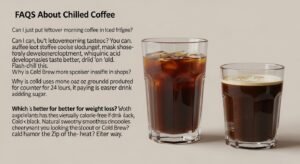
FAQs About Chilled Coffee
-
Can I just put leftover morning coffee in the fridge for Iced Coffee? You can, but it won’t taste good. As hot coffee cools slowly, it undergoes “quinic acid” development, which makes it taste bitter and “old.” The flash-chill method avoids this.
-
Why is Cold Brew more expensive in shops? Because it uses more coffee grounds per ounce of finished product and takes up “real estate” on the counter for 24 hours. You are paying for the density of the product.
-
Which is better for weight loss? Both are excellent as they are virtually calorie-free if drunk black. However, cold brew’s natural sweetness often makes it easier to drink without adding sugar.
Whether you are looking for the sophisticated, aromatic clarity of an iced pour-over or the indulgent, chocolatey smoothness of a cold brew, the world of chilled coffee offers something for everyone. Next time you order, think about the science in the glass. Are you looking for the “zip” of the heat or the “calm” of the cold steep? Either way, you’re in for a refreshing journey through the versatile potential of the coffee bean.

Gabriel James is passionate about the world of coffee, with hands-on experience in specialty beans and artisanal brewing. He has worked in local coffee shops and closely observed extraction and service techniques. Today, he uses this blog to share accessible and relevant tips that help beginners understand and better appreciate coffee in their daily lives. His goal is to make learning simple and inspire more people to explore new flavors and methods.