
For most people, a cup of coffee is a static experience: a burst of flavor upon the first sip, followed by a gradual, pleasant decline. But what if your coffee could evolve, revealing new, distinct layers of aroma and taste with every passing minute? This is not a trick of the mind, but a little-known technique embraced by professional baristas and serious home brewers: controlled temperature stratification. It transforms a simple cup into a dynamic sensory journey, allowing you to experience the full spectrum of a bean’s potential. This article will delve into the science behind this phenomenon and show you how to unlock these natural, shifting layers of flavor in your own home.
The Science of Shifting Flavors
The reason your coffee tastes different as it cools is rooted in the volatility of aromatic compounds. Coffee contains hundreds of these compounds, each with a different boiling point. When the coffee is piping hot (around 180°F or 82°C), the most volatile, often sharp or acidic, compounds are released first. As the temperature drops to a comfortable drinking range (around 140°F or 60°C), the mid-range compounds—the sweet, fruity, and floral notes—become more prominent. Finally, as the coffee cools further (below 120°F or 49°C), the heavier, more complex, and sometimes bitter compounds, along with the body and mouthfeel, are revealed. The key to the technique is not just letting it cool, but controlling how it cools to maximize the separation and clarity of these layers.

The Little-Known Technique: Controlled Stratification
The technique of controlled stratification involves manipulating the cooling process to create distinct temperature zones within your cup, or to simply slow the cooling to allow for a more deliberate tasting experience. The most effective way to achieve this is through a meticulous pour-over method, followed by a specific serving ritual.
1. The Pour-Over Precision
While the brewing method itself is crucial (for instance, a clean pour-over like a V60 or Chemex is ideal for clarity), the stratification begins immediately after the brew. Instead of pouring the entire brew into a pre-heated mug, the technique suggests a two-stage pour into two separate vessels.
- Vessel 1 (The Hot Core): A small, thick-walled ceramic cup, pre-heated, receiving about one-third of the brew. This keeps a portion of the coffee intensely hot, preserving the initial volatile aromas.
- Vessel 2 (The Cooling Layer): A wider, thin-walled glass or porcelain cup, receiving the remaining two-thirds. This allows the majority of the coffee to cool rapidly and evenly, bringing out the mid-range flavors quickly.
This immediate separation creates two distinct starting points for your tasting journey. For a deeper understanding of how different methods affect the final cup, you can refer to our article on The Difference Between Fast and Slow Coffee Brewing Methods.
The Three Flavor Layers of the Journey
By employing controlled stratification, you can deliberately taste the three main layers of flavor that emerge as the coffee temperature changes.
Layer 1: The Volatile Peak (Hot – Above 160°F / 71°C)
At this temperature, the coffee is at its most intense. You will primarily taste the acidity and the brightest, sharpest aromas. These are the highly volatile compounds that escape quickly. If the coffee is well-roasted, this stage will present clean, vibrant notes (citrus, berry). If the coffee is poorly roasted or extracted, this stage can be overwhelmingly sour or bitter. This is the stage where the initial quality of the bean is most apparent.
Layer 2: The Sweet Spot (Warm – 140°F to 120°F / 60°C to 49°C)
This is the “sweet spot” for tasting. As the temperature drops, the perception of acidity mellows, and the sweetness, body, and complex floral/fruity notes become dominant. This is where the subtle flavors—chocolate, caramel, vanilla, and specific fruit notes—are most clearly defined. The coffee feels balanced, harmonious, and full-bodied. This is the ideal temperature for savoring the true character of a specialty coffee.

Layer 3: The Complex Finish (Cool – Below 120°F / 49°C)
As the coffee cools further, the flavor profile changes dramatically. The sweetness may recede slightly, but the body and texture become more pronounced. You might notice a heavier, almost syrupy mouthfeel. New, earthy, or nutty notes that were previously masked by heat can emerge. This stage is crucial for assessing the coffee’s overall quality and cleanliness. A high-quality coffee will maintain a pleasant, complex flavor even when cool, while a lower-quality one will often turn flat or overly bitter.
Practical Application: How to Master the Technique at Home
You don’t need a lab to practice this. Here is a simplified method to experience the full flavor journey:
- Use a Clean Brew: Brew your coffee using a method that produces a clean cup, like a V60, Chemex, or even a French Press with a fine filter.
- The Initial Wait: Immediately after brewing, pour the coffee into a standard mug. Wait for exactly two minutes. This initial cooling period is essential to avoid scalding your palate and to allow the most volatile compounds to dissipate slightly.
- The First Sip (Layer 1): Take a small, quick sip. Focus on the intensity and the acidity.
- The Second Wait: Wait another three minutes. The coffee is now entering the sweet spot.
- The Second Sip (Layer 2): Take a larger sip. Notice the sweetness and the clarity of the mid-range flavors. This is the peak of the experience.
- The Final Wait: Wait until the coffee is just warm, almost room temperature (about five more minutes).
- The Final Sip (Layer 3): Take the final sip. Observe the body, the texture, and any lingering complex notes.
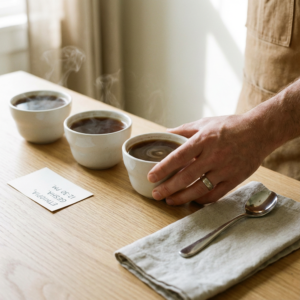
This simple ritual, similar to the process of professional coffee cupping, forces you to slow down and appreciate the subtle evolution of the beverage. It’s a small detail that makes your coffee much more flavorful, a concept we explored in our article on Simple Methods That Make Coffee Much More Flavorful.
Beyond the Cup: Why This Matters
Understanding how temperature affects flavor is not just a parlor trick; it’s a fundamental aspect of coffee appreciation. It allows you to:
- Identify Quality: A coffee that tastes great hot but turns bitter or sour when cool is likely a lower-quality bean or was poorly roasted/extracted.
- Optimize Brewing: You can adjust your grind size or water temperature to target the flavors you want to emphasize at a specific temperature.
- Enhance Enjoyment: It turns a routine drink into a mindful, multi-stage experience.
The next time you brew a cup, resist the urge to gulp it down. Instead, embrace the cooling process. By paying attention to the little-known technique of controlled stratification, you will discover a depth and complexity in your coffee that you never knew existed.

Conclusion
The secret to the coffee that changes flavor as you drink it lies in patience and a little bit of science. By controlling the cooling process, you are essentially peeling back the layers of the bean’s character, moving from bright acidity to rich sweetness and finally to deep, complex body. This technique is a testament to the fact that the best coffee experiences are often found in the details. It’s a simple, human-approved way to elevate your daily ritual and truly taste the world in your cup.

Gabriel James is passionate about the world of coffee, with hands-on experience in specialty beans and artisanal brewing. He has worked in local coffee shops and closely observed extraction and service techniques. Today, he uses this blog to share accessible and relevant tips that help beginners understand and better appreciate coffee in their daily lives. His goal is to make learning simple and inspire more people to explore new flavors and methods.