
For centuries, coffee has been more than just a beverage; it has been a ritual, a social lubricant, and a canvas for flavor exploration. While modern espresso machines and pour-over devices dominate the specialty coffee scene, a few ancient, almost forgotten methods hold the key to unlocking hidden notes and aromas that contemporary techniques often miss. One such method, a secret of ancient baristas, is the “Cold-Hot Immersion” technique, a simple yet profound way to extract the full, nuanced potential of the coffee bean.
This article delves into the history and science of this little-known method, offering a step-by-step guide to recreate this rich, layered experience at home. It is a testament to the fact that sometimes, the best innovations are simply rediscoveries of the past.
The Principle of Dual Extraction: Why It Works
The Cold-Hot Immersion method is based on a dual-stage extraction process that capitalizes on the unique properties of both cold and hot water.
- Cold Immersion (The Awakening): The first stage involves a brief, cold-water soak, similar to a very short cold brew. Cold water is a superior solvent for certain compounds, particularly those responsible for sweetness and delicate floral/fruity notes. This initial cold soak gently “wakes up” the coffee grounds, dissolving these desirable compounds without extracting the bitter, harsh elements that high heat can release too quickly. This process sets the stage for a cleaner, more complex final cup.
- Hot Immersion (The Full Bloom): The second stage introduces hot water, which rapidly extracts the remaining compounds, including the body, oils, and deep chocolate/nutty notes. Because the initial harsh compounds were already partially dissolved and the grounds are saturated, the hot water extraction is more balanced and less aggressive, preventing over-extraction and bitterness.
This controlled, two-step process results in a coffee that is exceptionally smooth, with a pronounced sweetness and a clarity of flavor that allows the bean’s hidden characteristics to shine through.
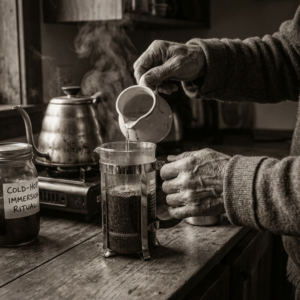
The Lost Recipe: Cold-Hot Immersion Step-by-Step
This method is best performed using a French Press, as it allows for full immersion and easy separation of the grounds.
Ingredients and Equipment:
- Freshly roasted coffee beans (medium-fine grind, slightly coarser than for pour-over)
- Filtered water (cold and hot)
- French Press
- Timer
The Ritual:
- The Cold Soak (15 Minutes):
- Add your coffee grounds to the French Press.
- Pour a small amount of cold, filtered water over the grounds—just enough to saturate them (about a 1:2 ratio of coffee to water).
- Stir gently to ensure all grounds are wet.
- Let the mixture sit for 15 minutes. This is the “awakening” phase, where the cold water begins to draw out the delicate flavors.
- The Hot Infusion (4 Minutes):
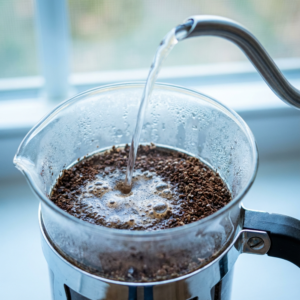
- After 15 minutes, pour the remaining hot water (around 200°F / 93°C) into the French Press.
- Stir once gently.
- Place the lid on the French Press, but do not plunge.
- Let it steep for 4 minutes. The hot water now completes the extraction, building the body and depth of flavor.
- The Gentle Plunge and Serve:
- Slowly and steadily plunge the filter down.
- Immediately pour the coffee into your serving cup. Do not let it sit on the grounds, as this will lead to over-extraction.
This method is a perfect example of how small details can completely change the preparation, a concept we explored in our article on How Small Details Completely Change the Preparation.
Why This Method Was Forgotten
The Cold-Hot Immersion method requires patience and a specific understanding of the coffee’s flavor profile. It was largely replaced by faster, more standardized methods during the industrialization of coffee brewing, such as the drip machine and the espresso machine, which prioritized speed and consistency over nuanced flavor.
However, in the modern specialty coffee movement, there is a renewed interest in these “lost” techniques. Baristas are finding that this dual-temperature approach offers a unique way to highlight the complex, layered flavors of high-quality single-origin beans.
Unlocking Hidden Notes
The most remarkable aspect of this technique is its ability to enhance notes that are often muted in traditional hot brewing. You will likely notice:
- Enhanced Sweetness: The cold soak pulls out more of the natural sugars, resulting in a distinctly sweeter cup.
- Cleaner Finish: The reduced exposure to high heat minimizes the extraction of harsh tannins and bitter compounds, leading to a clean, pleasant aftertaste.
- Layered Aromatics: The two-stage process separates the volatile and non-volatile compounds, allowing you to perceive them as distinct layers of flavor as the coffee cools.
This method is a true journey for the palate, offering a depth of flavor that is both surprising and rewarding. It is a simple, human-approved way to elevate your daily ritual and truly taste the world in your cup.

Conclusion
The Cold-Hot Immersion method is a beautiful blend of ancient wisdom and modern understanding of coffee chemistry. By taking a few extra minutes to employ this dual-temperature approach, you move beyond the ordinary and unlock a hidden world of flavor within your coffee beans. It is a lost recipe worth rediscovering, offering a truly unique and complex cup that will impress even the most seasoned coffee connoisseur.

Gabriel James is passionate about the world of coffee, with hands-on experience in specialty beans and artisanal brewing. He has worked in local coffee shops and closely observed extraction and service techniques. Today, he uses this blog to share accessible and relevant tips that help beginners understand and better appreciate coffee in their daily lives. His goal is to make learning simple and inspire more people to explore new flavors and methods.