
You’ve done the research. You’ve navigated the aisles of specialty roasters, perhaps even following a guide on The 10 Coffee Brands Americans Should Experience At Least Once. You’ve finally brought home a bag of premium, high-altitude beans that promise notes of jasmine, stone fruit, or rich dark chocolate. But here is the hard truth: from the moment that bag is opened—and even before—a clock starts ticking. Without the right storage strategy, that $25 bag of “unforgettable” coffee can turn into a stale, flat, and woody disappointment in a matter of days.

Understanding coffee storage is about understanding the chemistry of degradation. Coffee beans are organic, porous structures filled with delicate oils and volatile aromatic compounds. They are, in essence, a “fresh” product, much like bread or produce. In the United States, where we often buy in bulk or stock up during trips to our favorite roasters, knowing how to fight the four Horsemen of the Coffee Apocalypse—air, moisture, heat, and light—is the difference between a mediocre morning and a world-class sensory experience.
The Four Enemies of Freshness
To protect your beans, you must first understand what is attacking them. Each of these four factors accelerates the process of oxidation and staling, stripping away the very flavors that make specialty coffee worth the price.
-
Air (Oxygen): This is the primary enemy. Oxidation happens the moment the beans are exposed to the atmosphere. Oxygen breaks down the lipids (oils) in the coffee, leading to rancidity. This is why coffee that has been sitting in an open hopper or a poorly sealed bag starts to smell like “old basement” or cardboard.
-
Moisture: Coffee is hygroscopic, meaning it absorbs moisture from the air. If you live in a humid climate or store your coffee near the steam of a dishwasher or stove, the beans will absorb those odors and dampness, leading to mold or a muted flavor profile.
-
Light (UV Rays): Just like sunlight bleaches the color out of a photograph, UV rays break down the chemical bonds in coffee beans. This “photodegradation” happens surprisingly fast. If your coffee is in a clear glass jar on a sunny countertop, it’s being damaged every second the sun is out.
-
Heat: Heat speeds up the movement of molecules. In a warm kitchen, the volatile aromatics inside the bean move faster and escape into the air more quickly. This is why Why Some Cheap Coffees Surprise You and Some Expensive Ones Disappoint often comes down to how the beans were handled before they even reached your brewer. If they sat in a hot warehouse or a sunny mailbox, the “expensive” beans might already be dead on arrival.
To Freeze or Not to Freeze? The Great Debate
One of the most controversial topics in the American coffee community is whether or not to store beans in the freezer. For decades, the “official” advice was a resounding “no” because the moisture in the freezer could cause freezer burn and the beans could absorb the smell of that frozen pizza or old fish.
However, modern science has refined this. If you are planning to use your beans within two weeks, do not freeze them. A cool, dark pantry is perfect. But, if you have bought a large quantity and want to preserve it for months, the freezer can be your best friend—if you do it correctly.
The secret is the vacuum seal. If you freeze coffee, it must be in a completely airtight, moisture-proof container (like a vacuum-sealed bag). When you take it out, you must let it come to room temperature completely before opening the seal. If you open a cold bag of beans in a warm room, condensation will immediately form on the beans, ruining them instantly.
The Myth of the Fridge
While the freezer is a “maybe,” the refrigerator is a definitive “no.” A fridge is a damp, dark box filled with things that smell like onions, leftovers, and milk. Because coffee is so porous, it acts like a sponge for these odors. Furthermore, every time you take the coffee out for your morning brew and put it back in, the temperature fluctuation causes micro-condensation. If you want your coffee to taste like “last night’s takeout,” put it in the fridge. Otherwise, keep it far away.
The Anatomy of the Coffee Bag: Why the Valve Matters
Have you ever noticed that little plastic circle on your coffee bag with tiny holes? That is not for smelling the coffee (though it works for that too). It is a one-way degassing valve.
Freshly roasted coffee produces a significant amount of Carbon Dioxide (CO2). For the first few days after roasting, the bean is literally “breathing” out gas. If the bag were completely sealed, it would swell up and explode. The one-way valve allows the CO2 to escape without letting oxygen get in. This is why keeping the coffee in its original bag—if it has a valve and a good zip-lock—is often better than moving it to a cheap plastic container.
Choosing the Right Storage Container
If you want to move beyond the original packaging, you need a dedicated coffee vault. Here is what to look for:
-
Opaque Material: Ceramic, stainless steel, or tinted glass. Never use clear glass unless it’s kept inside a completely dark cabinet.
-
Airtight Seal: A simple screw-top isn’t enough. Look for containers with a silicone gasket or a mechanical “vacuum” lid that pushes the air out as you close it (like the Airscape or Fellow Atmos canisters).
-
The “Dead Space” Problem: As you use your coffee, the container becomes emptier, meaning there is more oxygen sitting inside with the beans. The best containers are those that allow you to adjust the volume or “pump” the air out.
This level of care is essential when you are trying to recreate the experience of The Day I Discovered My Favorite Coffee Flavor. You want to ensure that the 50th gram of coffee tastes just as vibrant as the 1st gram you pulled from the bag.
Whole Bean vs. Pre-Ground: The Freshness Timeline
If you are serious about freshness, there is no substitute for whole bean coffee. When you grind coffee, you increase the surface area by thousands of times. Oxidation, which takes weeks to dull a whole bean, can ruin ground coffee in as little as 20 minutes.
-
Whole Bean: Stays “peak fresh” for 2–4 weeks after opening.
-
Pre-Ground: Stays “peak fresh” for about 20–30 minutes.
Even if you store pre-ground coffee in the best vacuum vault in the world, the flavor loss that occurred during the grinding process cannot be reversed. This is why we always emphasize that the best investment you can make for your kitchen is a burr grinder, allowing you to “unlock” the freshness only seconds before you brew.
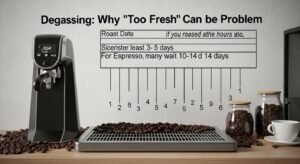
Degassing: Why “Too Fresh” Can Be a Problem
Is it possible for coffee to be too fresh? Surprisingly, yes. If you brew coffee that was roasted four hours ago, the high levels of CO2 will interfere with the water’s ability to extract the flavor. The gas pushes the water away, resulting in a “bubbly” brew that tastes acidic and undeveloped.
Most roasters recommend waiting at least 3 to 5 days after the “Roast Date” before brewing. For espresso, many baristas wait 10 to 14 days to allow the beans to stabilize. Understanding this timeline helps you manage your storage—you aren’t just storing it to keep it from getting old; you’re also managing its “peak” maturity.
The Impact of Storage on Different Roast Levels
Interestingly, the roast level affects how you should store your beans.
-
Dark Roasts: These are more porous and have more oils on the surface. These oils oxidize very quickly. Dark roasts should be used faster and protected even more strictly from heat.
-
Light Roasts: These are denser and have less surface oil. They tend to stay “fresh” a little longer and can often benefit from a longer degassing period (sometimes up to 2 or 3 weeks for the best flavor).
Practical Tips for the Daily Drinker
To make storage easy, follow these three simple rules:
-
Buy Smaller Quantities: Instead of a 2lb bag from a big-box store, buy a 12oz bag every two weeks. Freshness is a logistical game.
-
Keep it on the Counter (in the right spot): Find a cool, dry corner of your kitchen away from the oven, the toaster, and the window.
-
The “Transfer” Rule: If your original bag doesn’t have a seal, transfer it immediately to an airtight canister. Don’t use a chip clip on a folded-over bag; it doesn’t provide an airtight seal.
FAQs About Coffee Storage
-
Does “Oily” coffee mean it’s fresh? Usually, it’s the opposite. In dark roasts, oil on the surface means the internal structure of the bean has broken down, and those oils are now exposed to oxygen. In light or medium roasts, you shouldn’t see much oil at all if the beans are fresh.
-
Can I use the “Smell” of the beans to check freshness? Yes. Fresh coffee should smell intense and complex. If it smells like “nothing,” or if it has a sour, rancid scent like old vegetable oil, it’s past its prime.
-
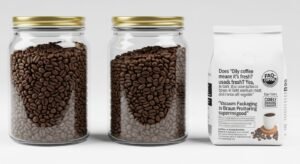
Is “Vacuum Packaging” from the supermarket good? Those “bricks” of coffee are vacuum-sealed to prevent oxidation, but the coffee is often stale before it’s even sealed, as most mass-market brands don’t use a “one-way valve” system for immediate bagging.
Coffee is a journey of volatile flavors. By respecting the storage process, you are respecting the work of the farmer and the roaster. You are ensuring that every time you open that canister, the aroma that fills your kitchen is as vibrant and “unforgettable” as the day the beans left the cooling tray.

Gabriel James is passionate about the world of coffee, with hands-on experience in specialty beans and artisanal brewing. He has worked in local coffee shops and closely observed extraction and service techniques. Today, he uses this blog to share accessible and relevant tips that help beginners understand and better appreciate coffee in their daily lives. His goal is to make learning simple and inspire more people to explore new flavors and methods.