
In the world of specialty coffee, there exists a tier of exclusivity that most enthusiasts will never experience. It’s not about the most expensive equipment or the most sophisticated brewing technique. It’s about access to something genuinely scarce—coffee so rare that only a handful of packages make their way to American shores annually.
I became curious about this world of ultra-rare coffee, and my research led me down a fascinating path. What I discovered challenged everything I thought I knew about coffee scarcity and value.
The Definition of Rarity in the Coffee World
Coffee rarity operates on multiple levels. Some coffees are rare because they come from limited microlots. Others are rare because they’re produced in quantities so small that distribution becomes nearly impossible. But the rarest of all? Those are coffees that face both production constraints and export restrictions.
When we talk about coffee arriving in the USA in only a few packages per year, we’re discussing something extraordinary.
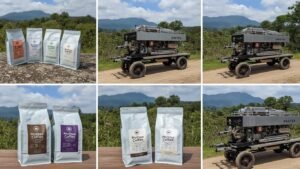
The United States coffee market is enormous, consuming roughly 400 million pounds of coffee annually. Yet certain coffees—the truly exceptional ones—remain virtually unknown to American consumers. This isn’t due to marketing failure or lack of quality. It’s due to fundamental scarcity.
Why Some Coffees Never Leave Their Country of Origin
Many countries that produce exceptional coffee have internal consumption that rivals or exceeds their export capacity. Ethiopia, for instance, consumes a significant portion of its own coffee production domestically. When you combine this with limited export infrastructure and government regulations, you create a situation where certain coffees simply cannot reach international markets in meaningful quantities.
The rarest coffees often come from regions where production is measured in hundreds of pounds rather than thousands of tons.
The Journey of a Micro-Lot Coffee
To understand rarity, we need to understand the journey of a micro-lot—a coffee produced in such limited quantities that it becomes a collector’s item rather than a commodity.
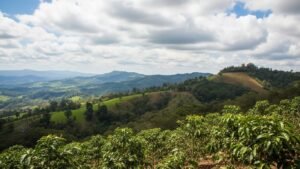
Micro-lots typically come from single farms or even single fields within a farm. A farmer might dedicate one hillside to an experimental variety or processing method. The resulting harvest might yield only 500 to 1,000 pounds of green coffee beans.
From Farm to Importer
Once harvested and processed, these beans must find their way to an importer willing to take on the logistics of handling such small quantities. This is where the first major bottleneck occurs. Most importers work with volumes in the thousands of pounds. A 500-pound lot requires the same paperwork, shipping containers, and regulatory compliance as a 50,000-pound shipment.
The economics don’t favor small quantities. Yet certain importers specialize in exactly this—seeking out the world’s most unique coffees, regardless of volume.
The Importer’s Challenge
Specialty coffee importers who deal in rare lots face unique challenges. They must maintain relationships with farmers across multiple countries. They must understand local export regulations, currency fluctuations, and agricultural cycles. They must also have the capital to purchase these coffees months before they can sell them.
When a truly exceptional micro-lot becomes available, importers face a decision: purchase the entire lot and hope to find buyers, or let it go to a competitor.
The Rarest Coffee I Could Find
My research led me to a coffee so rare that fewer than 200 pounds arrive in the USA annually. It comes from a specific region in East Africa, produced by a cooperative of small farmers using a traditional fermentation method that takes three weeks.
The coffee has a unique flavor profile—bright, complex, with notes that seem to shift as the cup cools. But the flavor isn’t what makes it rare. It’s the combination of factors: limited production, export restrictions, and the fact that most of the harvest is consumed locally.

Why It’s So Difficult to Find
When I tried to locate this coffee, I discovered that fewer than five importers in North America carry it. Of those five, most sell out within weeks of receiving their shipment. The coffee typically retails for $40-60 per pound—a premium price that reflects both quality and scarcity.
But here’s the interesting part: the farmers who produce this coffee don’t charge premium prices. The high retail cost reflects the logistics, the importer’s margin, and the roaster’s margin. The actual value added at each step is significant, but the fundamental scarcity is what drives the entire market.
The Secondary Market
For the rarest coffees, a secondary market has emerged. Collectors purchase these coffees and sometimes resell them at auction. I found listings for unopened bags of rare coffees selling for double or triple their original retail price.
This mirrors the wine market, where certain bottles become investments rather than consumables. Some people buy these coffees with the intention of eventually drinking them. Others collect them as status symbols.
The Economics of Ultra-Rarity
Understanding why certain coffees remain so rare requires understanding the economics of coffee production.
A farmer in Ethiopia might produce 1,000 pounds of exceptional coffee. They have several options: sell to a local cooperative, sell to a regional buyer, or attempt to find an international importer. Each option has different economics and different outcomes.
The Farmer’s Perspective
For most farmers, selling to a local cooperative is the most straightforward option. They receive payment quickly, and the cooperative handles all export logistics. But this means the coffee enters a bulk market, where it loses its identity.
To maintain a micro-lot’s identity and reach international markets, a farmer must either work directly with an importer or partner with a cooperative that specializes in specialty coffee. This requires trust, communication, and often a long-term relationship.
The Importer’s Economics
An importer purchasing a 500-pound micro-lot might pay $5-8 per pound for green coffee. After shipping, import duties, and storage, their cost basis might reach $8-10 per pound. They then sell to roasters at $10-12 per pound.
The roaster purchases at $10-12 per pound and must roast, package, and distribute. Their retail price of $40-60 per pound might seem high, but it reflects all these costs plus their margin.
What Makes a Coffee Truly Rare?
After researching this topic extensively, I’ve identified several factors that determine whether a coffee becomes rare or common:
Production volume is the primary factor. Coffees produced in quantities under 5,000 pounds annually are genuinely rare.
Export restrictions play a significant role. Some countries limit coffee exports or require government approval for international sales.
Processing complexity can create scarcity. Coffees requiring specialized processing methods are harder to produce at scale.
Market demand versus supply creates the final equation. Even abundant coffees can feel rare if demand exceeds supply.
Discovering Rare Coffees: A Guide for Enthusiasts
If you’re interested in exploring rare coffees, understanding how to find them is essential. Most rare coffees never appear in mainstream retail channels. Instead, they’re found through specialty importers and direct-to-consumer roasters.
If you want to deepen your appreciation for specialty coffee in general, exploring how to identify a good coffee by its aroma and color provides foundational knowledge that will help you evaluate rare coffees when you encounter them.
You might also benefit from learning about the evolution of coffee preparation rituals around the world, which provides context for how different cultures approach coffee appreciation and might inspire you to explore rare coffees through different brewing methods.
Conclusion: The Value of Rarity
The story behind rare coffee isn’t just about scarcity or exclusivity. It’s about the intersection of agriculture, trade, culture, and human connection. Each rare coffee represents a specific place, a specific moment in time, and the efforts of specific people.
When you hold a bag of truly rare coffee—one of only a few dozen packages that reached your country that year—you’re holding something that connects you to farmers, importers, and roasters across the world. You’re holding a product of careful cultivation, thoughtful processing, and deliberate preservation of quality.
The rarity isn’t artificial. It’s not created by marketing or artificial scarcity tactics. It emerges naturally from the reality of coffee production. Some coffees are rare because they must be. And that authenticity is what makes them genuinely special.
Whether you ever taste one of these ultra-rare coffees or not, understanding their existence enriches your appreciation for coffee as a whole. It reminds us that in a world of mass production and commodification, there still exist pockets of genuine scarcity and authentic value.

Gabriel James is passionate about the world of coffee, with hands-on experience in specialty beans and artisanal brewing. He has worked in local coffee shops and closely observed extraction and service techniques. Today, he uses this blog to share accessible and relevant tips that help beginners understand and better appreciate coffee in their daily lives. His goal is to make learning simple and inspire more people to explore new flavors and methods.