
In the ever-evolving world of specialty coffee, we are always searching for the perfect cup. We invest in high-quality grinders, experiment with exotic beans, and debate the merits of various brewing methods. However, one of the most important components in coffee preparation is often the most neglected: water. We tend to think of water as a simple solvent, a neutral vehicle for flavor. But what if we told you that water itself can be manipulated to reveal hidden dimensions of flavor, transforming a common bag of beans into an extraordinary sensory experience? There is a little-known technique, a three-stage water extraction method, that allows you to control the extraction process with such precision that it is possible to extract rare and delicate notes even from the most common coffee beans. It is a method that does not require sophisticated equipment, just a little patience and a new way of thinking about the role water plays in your daily ritual.

The fundamental principle behind this method is that different flavor compounds in coffee are soluble at different temperatures and at different speeds. Initial contact with water, known as pre-infusion, is crucial for releasing carbon dioxide and preparing the coffee bed for uniform extraction. However, the three-stage method takes this a step further, dividing the infusion into distinct temperature phases. Instead of using water at a single constant temperature, you use water at three different temperatures—cool, warm, and hot—to selectively extract different layers of flavor. This approach moves away from the conventional wisdom of maintaining a constant temperature, but it is precisely this variation that allows for a more complex and subtly nuanced cup. It is a technique that requires a little practice, but the results are worth the effort, as we will explore in the following sections.
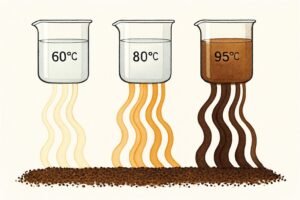
Stage 1: Cold Water Pre-infusion
The first stage of this method is a cold water pre-infusion. In it, water is used at a temperature around 60°C (140°F) to gently saturate the coffee grounds. This initial, cooler infusion aims to extract the most delicate and volatile aromatic compounds, without immediately extracting the heavier, more soluble solids. Imagine it as a gentle awakening for your coffee. This step is crucial for preserving the bright, floral, and fruity notes that are often lost when hotter water is used from the start. It also helps create a more uniform extraction, ensuring that all the grounds are completely saturated before the main brewing process begins. This is a concept we address in our article on the “First Sip Effect”, where we discuss the importance of the initial sensory experience. Cold water pre-infusion is the first step to creating a coffee that surprises and delights from the very first sip.

Stage 2: Warm Water Extraction
After the cold water pre-infusion, the second stage involves a warm water extraction. Here, water is used at a temperature around 80°C (176°F) to begin the main brewing process. This is where the sugars and acids that give the coffee its sweetness and body begin to be extracted. This higher temperature is hot enough to dissolve these compounds, but not so hot as to start degrading the more delicate flavors extracted in the first stage. This is a crucial balance, and it is here that the magic of the three-stage method really begins to shine. By carefully controlling the temperature at this stage, you can create a vibrant and sweet cup of coffee, with a clean and well-defined flavor profile. It is a technique that requires a little precision, but the results are very different from the one-dimensional flavors obtained with a single-temperature infusion.
Stage 3: The Hot Water Finish
The final stage of the three-stage method is the hot water finish. In it, water is used at a temperature around 95°C (203°F) to extract the remaining soluble compounds, including the most intense and complex flavors that give the coffee its depth and richness. This final, hotter infusion is what gives the coffee body and a lingering aftertaste. By reserving the hottest water for the end, you manage to extract these compounds without burning the more delicate flavors extracted in the previous stages. This is the key to creating a complex and balanced cup of coffee, with a flavor profile that evolves as you drink it. It is a technique that requires a small paradigm shift, but the results prove the power of water in shaping the final flavor of your coffee, a concept we explored in our article on Simple Methods That Make Coffee Much More Flavorful.
Mastering the Three-Stage Method: Beyond the Basics
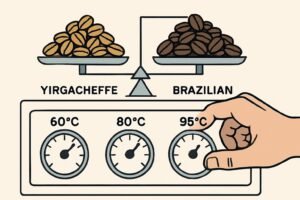
The beauty of the three-stage infusion method lies in its adaptability. Although the suggested temperatures (60°C, 80°C, 95°C) offer an excellent starting point, they are not rigid rules. The true master of this technique will adjust these temperatures based on the roast level and origin of the coffee bean. For example, a very light roast Ethiopian Yirgacheffe, known for its delicate floral notes, may benefit from an even cooler initial pre-infusion (perhaps 55°C) to preserve these volatile aromas, followed by a slightly lower final temperature to avoid over-extracting the lighter roast bean. On the other hand, a darker roast Brazilian bean, rich in chocolate and nutty notes, can withstand a higher initial temperature (65°C) to more intensely extract the heavier, desirable compounds. Experimentation is key; by meticulously monitoring your results and adjusting the temperature profile, you move from simply brewing coffee to actively creating its flavor profile. This level of control is what differentiates a good cup from a truly memorable cup, giving you the power to enhance the unique characteristics of any bean you choose.
The Ultimate Reward: A Coffee That Evolves.
The three-stage extraction method is more than just a brewing technique; it is a philosophy that respects the complexity of the coffee bean. It recognizes that a single temperature cannot extract the full flavor of the hundreds of compounds present in the grounds. By segmenting the extraction process, you create a layered flavor profile—a coffee that transforms and evolves as it cools, revealing new notes with every sip. This is the ultimate reward for the dedicated home barista: a cup that is not only perfectly balanced but also dynamic and surprising. It is a simple yet profound way to elevate your daily coffee ritual and extract those rare and hidden flavors that most people don’t even imagine exist in their common beans. Try this method and you will quickly discover that the secret to an extraordinary cup has always been in your hands, hidden in the subtle manipulation of the most basic ingredient: water.

Gabriel James is passionate about the world of coffee, with hands-on experience in specialty beans and artisanal brewing. He has worked in local coffee shops and closely observed extraction and service techniques. Today, he uses this blog to share accessible and relevant tips that help beginners understand and better appreciate coffee in their daily lives. His goal is to make learning simple and inspire more people to explore new flavors and methods.