
If you have spent any time in the specialty coffee scene, you have likely encountered the term “Single Origin.” It is a phrase that has become synonymous with quality, transparency, and a higher price tag. In a world where most of the coffee consumed globally is sold as a “blend”—a mixture of beans from various farms, regions, or even different countries—the rise of single origin coffee represents a shift toward a more intentional and artisanal way of drinking.
But what exactly are you paying for when you buy a bag of single origin beans? Is it just clever marketing, or is there a tangible difference in the cup? To understand the value of single origin, we have to look at coffee not as a generic commodity, but as a complex agricultural product, much like wine or fine chocolate. When you strip away the blending process, you are left with the purest expression of a specific terroir, a specific microclimate, and the specific labor of a single community of farmers.
Defining the Concept: From Region to Micro-Lot
The term “Single Origin” can be broader than most people realize. At its most basic level, it means the coffee comes from a single geographic location. However, the specificity of that location can vary significantly:
-
Single Country: The most common form of single origin. All the beans in the bag are from, for example, Ethiopia or Colombia. While this is better than a generic “global blend,” it is still quite broad because flavor profiles can vary wildly within a single country.
-
Single Region: This narrows it down further. You might see a bag labeled “Antioquia, Colombia” or “Sidamo, Ethiopia.” This ensures a more consistent flavor profile, as the altitude and soil conditions are more uniform.
-
Single Estate/Farm: This is where the quality truly begins to peak. The coffee comes from one specific farm owned by one family or company. This allows for total traceability.
-
Micro-Lot: This is the “elite” level of single origin. A micro-lot is a small harvest from a specific hillside of a single farm, often processed with a unique experimental method. This is usually The Difference Between Good and Unforgettable in the Coffee You Buy.
The Economic Reality: Why the Higher Price?
When you see a bag of single origin coffee that costs twice as much as a standard supermarket blend, it isn’t just because of the “specialty” label. There are several structural reasons for the price gap:
The Risk of Seasonality Unlike blends, which can be adjusted year-round by swapping in beans from different parts of the world to maintain a consistent taste, single origin coffee is seasonal. Once the harvest from a specific farm in Guatemala is sold out, it’s gone until the next year. This scarcity drives up the price.
Labor and Sorting To achieve the high “cup scores” required for single origin specialty coffee, the labor involved is immense. Farmers cannot use mechanical harvesters that strip both ripe and unripe cherries from the branch. Instead, workers must hand-pick only the perfectly ripe cherries. Furthermore, these beans undergo rigorous sorting processes to remove any defects. This ensures that Why Some Cheap Coffees Surprise You and Some Expensive Ones Disappoint is never a mystery—the “expensive” beans are priced that way because of the human hours spent ensuring perfection.
Traceability and Ethics Single origin coffee usually involves a shorter supply chain. Instead of the beans passing through dozens of middle-men and being tossed into a giant silo, the roaster often works directly with the farmer. This “Direct Trade” model ensures that the farmer receives a much higher percentage of the final price than they would in the commodity market.
Flavor Clarity: The Purest Expression of Terroir
The primary reason enthusiasts seek out single origin coffee is flavor clarity. When you blend beans, you are often trying to create a “balanced” profile—one bean provides the body, another provides the acidity, and another provides the sweetness. While this can be delicious, it often mutes the unique “personality” of the individual beans.
Single origin coffee is about celebrating those unique personalities, even the “weird” ones. It is the only way to experience the pure citrus and floral notes of a high-altitude Ethiopian Yirgacheffe or the earthy, spicy depth of a Sumatran bean. If you want to understand the Differences Between Coffees From Different Regions of the World, drinking single origin is the only way to do it. You are tasting the soil, the rain, and the altitude of one specific place on Earth.
The Role of the Roaster
Roasting single origin coffee is a delicate art. Since the goal is to highlight the natural characteristics of the bean, roasters typically use a lighter or medium roast profile. If you roast a single origin bean too dark, you begin to taste the “roast” (carbon, smoke, bitterness) rather than the “origin.”
A master roaster acts like a diamond cutter; they look at the “raw” potential of the green bean and decide exactly how much heat to apply to reveal its internal brilliance. This is why single origin coffee is often associated with the “Third Wave” of coffee, where the focus is on the intrinsic quality of the bean rather than the dark, oily roasts popularized in the past.
Single Origin vs. Blends: Which is Better?
It is a mistake to think that blends are inherently “bad.” In fact, creating a high-quality blend is one of the most difficult tasks for a roaster. A good blend is designed to be reliable—it tastes the same every morning, it cuts through milk perfectly in a latte, and it is easy to brew.
However, if you view coffee as an adventure rather than just a morning routine, single origin is the way to go.
-
Choose a Blend if you want a consistent, chocolatey cup that works well with cream and sugar.
-
Choose Single Origin if you drink your coffee black and want to be surprised by notes of blueberry, tomato, jasmine, or peach.
The Educational Value
One of the most rewarding aspects of buying single origin is the education that comes with it. Most bags will include information about the farmer, the altitude (measured in meters above sea level), the processing method (washed, natural, or honey), and the variety (Bourbon, Caturra, Geisha).
This transparency builds a connection between the consumer and the producer. You begin to recognize that your coffee didn’t just come from a store—it came from a person. You start to learn that you prefer coffees grown above 1,600 meters because of their “sparkling” acidity, or that you love “Natural” processed coffees because of their funky, fruit-forward sweetness. This knowledge transforms you from a passive consumer into an active connoisseur.
How to Brew Single Origin for the Best Results
Because single origin coffees are often complex and expensive, you want to use brewing methods that highlight their clarity.
-
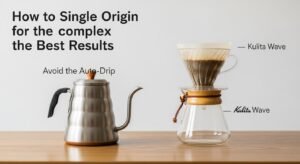
Avoid the Auto-Drip: Most cheap drip machines don’t get the water hot enough and don’t distribute it evenly, which “muddies” the delicate notes.
-
Use a Pour-Over: Methods like the V60, Chemex, or Kalita Wave are ideal. The paper filter removes oils and fine particles, resulting in a “clean” cup that allows the fruity and floral notes to shine.
-
Water Quality: Since single origin coffee is so delicate, the minerals in your water can drastically change the taste. Always use filtered water.
The Future of Single Origin
As climate change threatens coffee production, single origin farms are the most vulnerable. These are often small, high-altitude plots that are susceptible to even slight changes in temperature. By paying a premium for single origin, you are supporting the farmers who are at the front lines of sustainability. You are giving them the financial resources to invest in drought-resistant techniques and better infrastructure, ensuring that these unique flavors don’t disappear forever.
FAQs About Single Origin Coffee
-
Does single origin have more caffeine? No. Caffeine content is determined by the species of the bean (Arabica vs. Robusta) and the brewing method, not by whether it is a blend or single origin.
-
Why does my single origin coffee taste “sour”? Many single origin coffees have high acidity (which is a good thing!). However, if it tastes unpleasantly sour, you might be under-extracting. Try a slightly finer grind or hotter water.
-
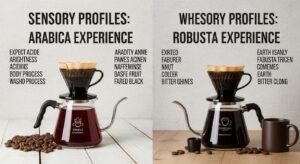
Is “Single Origin” always Arabica? Almost always. Robusta is typically used in blends to provide body and caffeine. While “Specialty Robusta” exists as a single origin, it is still quite rare in the American market.
In the end, single origin coffee is about respect. It is about respecting the specific environment where the coffee grew and the specific hands that picked it. It is an invitation to slow down and appreciate the diversity of the natural world, one cup at a time. While it may cost a few more dollars, the journey it takes your palate on is, quite literally, priceless.

Gabriel James is passionate about the world of coffee, with hands-on experience in specialty beans and artisanal brewing. He has worked in local coffee shops and closely observed extraction and service techniques. Today, he uses this blog to share accessible and relevant tips that help beginners understand and better appreciate coffee in their daily lives. His goal is to make learning simple and inspire more people to explore new flavors and methods.